
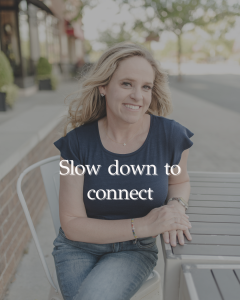
What if the key to a more connected, nourishing sex life is simply slowing down? In this episode of Sex for Saints, I will talk with sex researcher Chelom Leavitt about sexual mindfulness, shame, emotional connection, and why so many women struggle to feel fully present in their sexuality. We will explore how curiosity and non-judgment can transform not only our sexual experiences, but also the way we relate to ourselves, our spouses, and even our faith. We’ll also discuss women’s arousal, emotional safety, vulnerability in marriage, and why slowing down may be one of the most healing things couples can do for intimacy.
Here’s more information about Dr. Chelom Leavitt:
Dr. Chelom Leavitt received her PhD from Penn State. She studies sexuality in committed relationships and examines how mindfulness during sex is associated with positive outcomes for men and women. Her recent publications include work on sexual mindfulness, how loneliness impacts relationships, forgiveness, infidelity, and men’s and women’s sexual response cycles and orgasm. Chelom is married to David Leavitt, and they have nine children.
Listen to this episode here:
Watch this episode here:
Show Notes:
Amanda: Welcome back to the podcast, everyone. I am so excited today to have Chelom Leavitt on the podcast. Chelom, thank you so much for being here, and I’m just going to have you introduce yourself first because you can do it way better than I can.
Chelom: Well, thank you, Amanda. It’s my pleasure. I guess what’s maybe important to people listening is I have a PhD in sex research. I research sex mostly in the context of committed relationships. Like, how is sex a blessing to your marriage? And, I have loved that. I’ve loved that I’ve been able to, in my research, really look more closely at women’s sexuality, and so I’ve published a lot on that.
I’m also a mom of nine kids. I’ve been married for coming up on 37 years. I just absolutely love that job of being a mom. I also love my research and the work I get to do.
Amanda: Yes. So a lot of your research is based in sexual mindfulness, correct?
Chelom: Yeah.
Amanda: Okay, so someone who’s completely new to that concept, can you just kind of describe what sexual mindfulness is?
Chelom: Yeah. You know, it’s pretty simple and yet it’s kind of complex. It’s simple in that sexual mindfulness is really just slowing down, being more intentional, more aware, and more curious about arousal, what goes on between the two of you. So in a sexual context, can I maintain that sense of mindful awareness and non-judgment?
Amanda: Ooh, I love that. So, tell me a little bit about the non-judgment piece because I think that that is maybe hardest for a lot of women. Where does that judgment come from?
Chelom: Oh, my goodness, so many places. So, I mean, I think women are really trained, you know, just socialized to be critical of their body, of their sexuality even. A lot of women are taught, especially in religious cultures, right? We’re taught to kind of tamp that down or ignore that, be almost asexual until you get married, and then boom, it’s supposed to all turn on and it’s going to be wonderful.
Amanda: Yeah.
Chelom: But you know what that ends up doing is creating this shame and guilt around how we’re designed. And I really wish that we could better change that culture and say, “Yeah, I’m a sexual being from the get-go. That’s okay. Certainly within a religious context, I want to keep that in boundaries. I want to maintain those principles and values that I hold so dearly, but I also love and appreciate and celebrate my sexuality.”
So learning to be disciplined while learning to still embrace your sexuality is something that we don’t really address very well.
Amanda: No, we don’t. I mean, I talk about that all the time in my work. That switch doesn’t just flip once you get married. And if we haven’t addressed it the right way before, like now we’ve got to address all of the guilt and shame afterwards. I mean, so much of the work that I do is addressing that with women and couples.
But it would completely change things if we taught it differently in our families, but also, you know, in the church and society as a whole of how to address that and stay in alignment with our integrity and our values while still maintaining those boundaries.
Chelom: Yeah, and I think one way we could start doing that is, you know, as we’re teaching our kids about sex and about, you know, you might be tempted to masturbate, which is, you know, a bit of a boundary, or watch porn or whatever that is. Instead, maybe saying, “You know, when you start feeling arousal, because you will feel some arousal as you move through that process of maturation, both men and women. And, as that happens, can you just sit with your sexuality, with your arousal? And instead of feeling like I’m compelled to act on this, or I have to shove it down and shame myself over it, instead can I just sit with it and say, ‘Huh, that’s arousal. Interesting.’
And if we understand how arousal works, we’ll be able to teach our children that, you know, arousal has about a 20 minute lifespan. If we’re not intensifying it or acting on it, then it eventually just kind of comes and goes. And if I can sit for 20 minutes and just notice it, be okay with it, and not intensify it, then we don’t have to deal with the really nasty consequences of shame and stepping outside of the boundaries that we’re trying so hard to maintain.
Amanda: Yeah. Well, and because so many of us didn’t learn how to do that earlier on, I hear about that all the time with married couples as well. Like, if he’s aroused, it has to be satisfied.
Chelom: Yes. Right!
Amanda: Right? And then she feels obligated to do that even if she doesn’t want to. He feels like it’s like, “Well, I have this need. I have this arousal, and it needs to be taken care of. And you’re my only option,” right?
Chelom: Yeah.
Amanda: And that causes so many other problems within the relationship…
Chelom: It really does…
Amanda: …when we don’t learn how. I’m not sure if it’s an episode that’s gonna air before this episode or after this episode, but I have an episode in the works about that very thing, of being able to just sit with that arousal, be okay with it.
Chelom: Yeah. No, it’s such an important skill to learn early on so that you, like you’re saying, have really developed that and honed that skill once you are expressing your sexuality within a marriage.
Amanda: Yeah. Oh, I love that so much. So you developed the Sexual Mindfulness Project. A very structured intervention that you tested with couples. Can you walk us through what that looked like and what you found?
Chelom: Yeah, so, we know that everyone has a certain, like, base level of mindfulness, and we know that that can actually be taught. We can strengthen those tendencies towards mindfulness. We call mindfulness like a trait attribute. Like, that’s just something I possess.
Sexual mindfulness is being able to be mindful within a specific context, sex. And we know that state mindfulness varies as well, right? Some people are better at it, and some people not so much. So is it something we can teach? And that’s really what this intervention was aimed at. Kind of exploring. And what we found is that, yes, it can be taught, and people can increase their state mindfulness during sex.
And what we found that resulted in was better communication, better relational and sexual satisfaction, more emotional connection and, interestingly enough, more sex in all its varieties, right? Because when you’re actually enjoying the experience, you’re going to want to engage in it more frequently.
Amanda: Absolutely. And maybe we should actually define mindfulness because I think it’s a word that gets thrown around but maybe not everybody understands what mindfulness is. So can you just define what mindfulness is?
Chelom: So mindfulness, again, is just having this state of awareness of what’s happening just in the here and now, in this moment. How is my body feeling? What kinds of emotions am I experiencing? So really kind of letting yourself slow down so that you can actually take in more information about how I’m experiencing this particular moment.
Even if it’s a stressful moment. Can I slow down and say, “Yeah, I’m actually feeling a lot of anxiety. Where’s that coming from? How does that resonate in my body?”
And then the second part of mindfulness is, again, not being judgmental. Instead, opposite of judgment is curiosity so can I be curious about why am I feeling a little tension in my shoulders or heightened anxiety, which kind of makes my mind race? What might this be coming from?
Instead of saying, “Oh my gosh, I’m so terrible at this,” saying, “Hmm, I can understand why I might be experiencing, you know, these different sensations.”
Amanda: Don’t you think especially in today’s day and age that we tend to dwell in either the past or the future instead of in the present moment?
Chelom: Yeah, which we have no control over the past or the future. What happened happened. We are going to have to process it, and that’s important, but we would better process it if we can slow down our present moment and just realize that everything is impermanent, right? This moment is really all I have. So how can I best use this moment?
And then I think a lot of our anxiety comes from worrying about the future and what might happen, you know, down the road. Instead, again, focus on the here and now. What am I capable of right here?
Amanda: Right here. Yeah. Why do you think it’s so hard to slow down for most couples?
Chelom: Oh, I think a number of reasons. I think we live in a culture where that’s really encouraged, right? Double tasking and doing all sorts of things at the same time seems to be valued. Yet we know you really can’t do two things at the same time. You can kind of alternate between doing two things and then end up probably doing them less effectively than if you just gave your full attention to something.
And then the other reason I think is because it’s a way that we cope with unpleasant things. We keep ourselves very, very busy. We turn on our music loud, so that we don’t have to just sit quietly with ourselves.
In fact, there was a study at Harvard where freshmen were asked if they would rather experience electric shock, or sit quietly for 15 minutes just with their own thoughts.
Amanda: Oh my gosh.
Chelom: Most of them chose electric shock.
Amanda: Wow.
Chelom: Which is, like, really disturbing but telling, right?
Amanda: Yeah.
Chelom: Would rather go through something unpleasant than just sit and get to know ourselves.
Amanda: Yeah. Well, I think back to my past. So most of my audience knows this, but I was in an abusive marriage for 13 years and those were very dark times for me, and because of that, I suffered from a lot of anxiety and depression to the point where I nearly took my life. And if you had asked me back then to sit with my own thoughts for 15 minutes, I would have absolutely chosen the electric shock because my mind was such a dark place.
But, you know, as I’ve gotten healthier mentally and, you know, I’ve done this work… I mean, I got therapy, and I got coached first before I became a coach, and helped to learn how to quiet my mind and settle and be more curious with myself rather than judgmental. And I love the quiet now. Like, my mind isn’t… Even when it does want to go to a dark place, I don’t stay there, not because I’m judging myself and I feel like I have to escape out of it, but because I can be curious about it and just process it and let it pass.
And it’s completely changed my life and my experience, and I would definitely say it’s also changed my experience with sex as well.
Chelom: Yeah. Oh, of course. Yes. And, I hear what you’re saying, and all of us have some dark corners in our minds whether it’s all-encompassing at certain periods of our life, or just part of being human. Right? We all have them.
And what you’re describing is really that transformation of not being afraid of the dark corners. It’s almost like okay, I welcome some of these sad, hard, unpleasant emotions, and they’re going to teach me something if I can sit with them for a moment and, like you’re saying, process them.
Where do they come from? Why are they visiting me right now? How can I move through this?
And the key really is being non-judgmental and actually, like what you described, compassionate with yourself. Like, yeah I can see how I got here. And now I’m going to empower myself to move through this. And as we do that, you’re right, it’s going to change everything, but it is going to change sex.
Because instead of shaming myself and saying, “Ooh, I just don’t perform the way I want,” or, “I’m not very skilled,” or “I wish I were more like my husband,” or whatever it is, we say to ourselves, or, “I have a little belly fat,” or whatever it is, right?
Instead we’re like, “You know what? I love my body. I love how it is really working for my good.” You know? Even if that’s in sickness, and hard times, and anxiety, my body is just this amazing blessing in my life.
Amanda: Yeah. Well, another thing I discovered with all of this is how our brain is actually wired for survival and offers us thoughts that are actually very unhelpful and even hurtful as a way to help us survive. But we don’t have to believe all of them. And that changed a lot for me as well.
Chelom: Yeah. I mean, part of what you’re describing is adaptive. Like, when we are in a dangerous situation, we are just about survival, and maybe that means shoving everything down, and not saying what we feel, and not addressing the real harm that’s occurring in our lives. But at some point when we’re in a safe environment, those tendencies, right, that coping pattern that we used to survive is not helpful anymore.
Amanda: No.
Chelom: We have to allow ourselves to speak up, to say what it is we’re experiencing, and then process.
Amanda: Yeah. I love that.
Okay. So a lot of your research looks at women’s sexual experiences and how they might differ from a man’s. So what are the most important things that you want women to understand about their own experience that they probably haven’t been told?
Chelom: Yeah. You are not like your husband. I mean, and you know, we really should celebrate that as couples. Men and women are wired differently, and in fact, we are so far behind really understanding women’s sexuality that it was only maybe in the ’70s or ’80s when we even started talking about the clitoris.
Amanda: Yep.
Chelom: So women had no idea they had this body part that was simply for arousal. It has no other purpose other than pleasure. And so just knowing how you are different and that you don’t have to make excuses for wanting a little more emotional connection before you move into sex. Women are actually designed for that very purpose.
So women cannot orgasm unless they have heightened levels of oxytocin that they’re experiencing, right? Our bodies just don’t work that way. Women are looking for signals and signs and environments that indicate I’m in a safe place emotionally, physically, relationally. Because women are much more vulnerable in the sexual experience.
So men, we know, have increased oxytocin after they orgasm. Women need that increased oxytocin in order to orgasm. And so they’re not strange, they’re not odd because they want that emotional connection first before they move into the physical connection.
So if men and women understand that about women, we would change how we approach foreplay, how we approach the whole process. We would say, “Good on you for pushing for all of these connections emotionally. Let me help you with that,” right?
Amanda: Right.
Chelom: And I also think women just need to stop comparing themselves to others. We see their girlfriends, right? And we see more variability in women’s sexual arousal process than we see in men’s. Men have some variability as well but they’re pretty steady, right? They have pretty consistently high desire.
Sometimes women, because we are responsive to the relationship, we need to feel arousal first before we feel desire. And that’s okay. We need to start telling women that whatever it is, however you experience sex is okay. Let’s understand it, let’s move through it, let’s work with that.
Amanda: Right! Instead of thinking that you should be like a man-
Chelom: Right
Amanda: … or a man thinking that you should be like me, right?
Chelom: Exactly. It’s so harmful really when we approach sex that way. And, you know, what we find with men and women who really honor our differences and work together, they actually report much higher sexual satisfaction. Because honoring how a woman experiences sex increases arousal and pleasure for men, too.
Amanda: Yes. I love that …
Chelom: We really need to say I love it that men feel this consistent desire for sex. That’s such a blessing in our relationship. It means we will consistently come back and address that arousal. But we need to love that women want more meaning and emotion in the sexual experience.
Amanda: Yes. Oh, I love that. So for women who grew up in religious homes where sex was rarely talked about, that was definitely mine. It was often framed as something to manage or avoid, which we’ve kind of talked about. How does sexual mindfulness help them start to rewire that?
Chelom: That’s a great question. What it does is it slows down the process. So instead of me immediately having this, “I gotta shut it down. I shouldn’t feel sexual,” right? That’s shameful. That’s not feminine. That’s not womanly. Or at least it’s not what a righteous woman would experience.
Instead, kind of slowing that down and saying, “You know, I feel arousal and this is how I feel it.” And arousal is really intended to move me toward my spouse. And what a beautiful gift, what a wonderful tool we’ve been given to create this bond in our relationship.
You know, marriage is hard. Even in the best marriages we’re going to have these daily bumps and bruises that kind of pull us apart from each other. And a loving Heavenly Father gave us this tool to quickly bring us back together. To emotionally connect with each other, physically connect. It creates pleasure. Occasionally, when we want to, it can create a baby. But it is this powerful tool in our marriages for unity and strength.
Amanda: You know, I love that so much. For me, sex is such a place of nourishment and replenishment. Like you said, it’s a place to come back together when things have been hard. I mean, along with all of the good things, right? Like when everything is good between us, it’s a great place to be too, but it can be such a place of healing between the two of us when things have been hard, and I love that so much. And I think so many couples, and probably women especially, like when things are hard, they want to back away instead of come towards which can actually create more division in the relationship other than closeness and healing.
Chelom: Yeah. One thing that I wish I could get across to couples is that if we can be really vulnerable with each other about what it is we’re experiencing in the relationship individually. If I can share with my husband, like I said, some of these dark thoughts or things that I’m maybe a little ashamed of, or a fantasy that I might worry I’m going to be judged for.
If I can share those things with my partner and he receives it with acceptance and love and like I’m going to give you this really fragile part of me. And he’s going to hold it carefully. When that happens, it’s like we’re undressing ourselves emotionally, right? I’m going to let you see all of it, the warts, the little things that I’m not proud of. And that’s received in a loving, patient way. The natural result is that we want to undress physically and then share bodies. Because that is the natural outgrowth of this unity of our souls.
And I wish couples could understand this because then we wouldn’t shy away from these hard conversations. We would lean into it. We would say “Here’s the opportunity for us to create this stronger foundation of intimacy and pleasure, really, in our relationship.”
Amanda: That’s intimacy, right? It’s sharing it all, right? And I completely agree with you, that if we could… A lot of people say they want an intimate marriage, but they’re not actually willing to do that vulnerable hard work to create it. And then, when there’s a lack of emotional safety in the relationship, where you say something and it’s not held well.
You know, I, I think about… And it happens on both sides of course. But I think about these men who want that better sexual relationship with their wives, and they’re opening up and they’re being vulnerable and they’re sharing things and it is completely rejected. Like, it breaks my heart.
Chelom: Yeah, and I think women can see, if they can see his bid for sex is oftentimes just his awkward bid for emotional closeness. Sometimes men are not well-equipped to say, “I am feeling scared in this relationship. I love you so much. I never wanna lose you, and I see this distance between us.”
And so instead of saying that, because they haven’t been given the skills very well in life, right? Men have not been socialized to be emotionally deep. And yet some are and do a great job. But if women could see that as this is his bid for closeness, then maybe they could use a little more patience and say, “Sweetie, I see what you’re doing. I want us to go a little deeper than just sex today. I want us to share our hearts, our souls.”
And then it will likely turn into sex, but we’ve have to change this pattern of making a bid and then running away. We’ve got to say, “No, we really want to see each other naked emotionally, naked physically, naked relationally,” right? This is our job.
Amanda: Yep. Now, Esther Perel has said, you know, women were cultured in the language of emotions and men were cultured in the language of sex. But what they’re both wanting is the same thing. Connection. Intimacy.
And if we can get over how the other person was cultured to create that, you’re both going to be better off. The relationship is going to be better off.
Chelom: They should be intertwined. And yet we’ve kind of separated them. We’ve told women, “Oh, you know, you’re kind of a slut if you want sex very much.” And we’ve told men, you know, “Shut those emotions down.” And yet we just both have to learn from each other and come together and really honor where each other is coming from.
Amanda: Oh, I love that so much. I love that. So you’re also researching sexual sanctification and sexual flourishing. I love those two terms.
Chelom: Me too.
Amanda: Tell me what does sexual flourishing actually look like in a committed faith-based marriage, and what do you mean by sexual sanctification?
Chelom: Well, you know, they’re likely going to go together. Sexual sanctification is recognizing that God endorses sex, and He actually wants you to fully embrace this in a loving relationship and explore, just like we were talking about. Explore all those dark corners and those fantasies and everything with each other. God actually feels like this is a beautiful part of a loving marriage.
And sexual flourishing goes right along with that, in that I understand that sex is not just a standalone. It is something that creeps into every bit of our interactions, when we flirt with each other, when we feel like sex creates more creativity in my own personal life, right? Understand sex is a part of a vibrant, growing life.
It’s more than just how frequent, how many orgasms, how many positions. No, it’s about sharing my soul with this person and letting us both grow in the presence of each other because we can be so vulnerable in this relationship.
Amanda: Oh, my gosh. I just, I love that so, so much.
Chelom: It’s powerful.
Amanda: It’s so powerful. Jennifer Finlayson-Fife has said, like, “Sex is not the icing on the cake, it is the cake.”
Chelom: Exactly. It’s all of it. The whole meal.
Amanda: Yes. So if a woman is listening and she’s never once been fully present during sex, maybe she’s always in her head or just going through the motions, what’s one small practical thing that she could try this week?
Chelom: She could sit with herself just for however long she can tolerate, right? Maybe it’s just two minutes. Notice her breathing. Notice how her body feels. Where is she holding her pain? Where is she holding her stress? And start learning to love who you are. That’s where it starts.
You mentioned this earlier that the two great commandments are love God, love others as yourself. I think that starting with seeing how God just absolutely adores us and is working for our good. Accepting that fully in your life, that’s going to help you start loving yourself. As you love yourself, you’re going to be able to love others better. You’re going to be able to love a very flawed husband who doesn’t get it and who wants to get it. But we first have to start with being gentle with ourselves, sitting with yourself. That’s what I would say.
Amanda: Yeah. I love that. I love that. Well, as we wrap up here, what is the one thing that you most want couples to understand about sexual mindfulness that doesn’t get said enough?
Chelom: That slowing down is really counter-cultural. Our culture teaches us about fast, hot sex, and what I think is actually most nourishing and healing in our relationships is slowing sex down, being intentional about touch. I have couples just do a number of activities where we really focus on how does it feel to be touched. How does it feel to hold this person’s hand that you have gone through life with for some time? How does it feel to just be in each other’s presence?
As we do that, it really helps us connect sexually because it helps us connect emotionally.
Amanda: Thank you so much for being here with me today.
Chelom: My pleasure. Thanks for all the work you’re doing.